5th century BCE – 1st century CE
INTRODUCTION
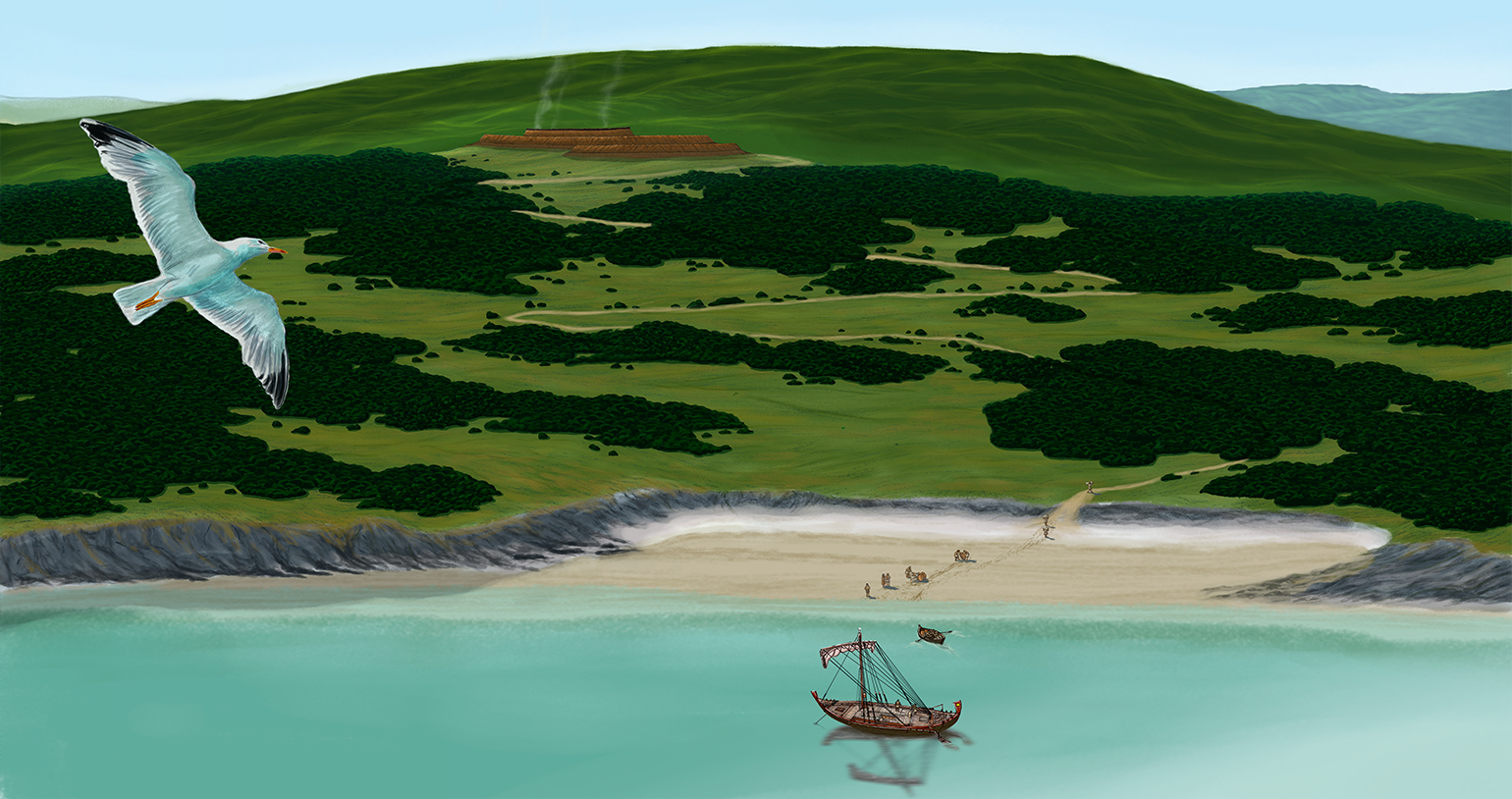
During the Iron Age, from the 9th century BCE (before the Common Era) until the arrival of the Roman Empire in the 1st century BCE, the landscape of the north-west of the Iberian Peninsula was organised around castros: autonomous, walled villages, most of them set in commanding positions.
Such is the case of the Castro de Centroña-Perbes, located on the boundary between the municipalities of Miño and Pontedeume, on a small hill at the end of a spur halfway up the southern slope of Monte de Bréamo, 193 m above sea level and just over 1 km from the coast.
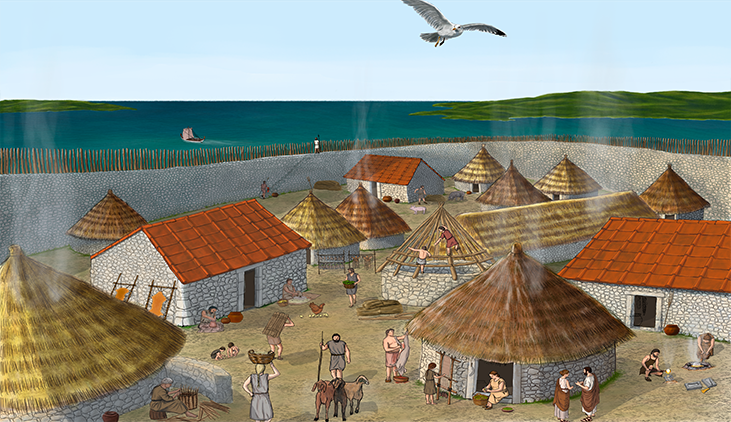
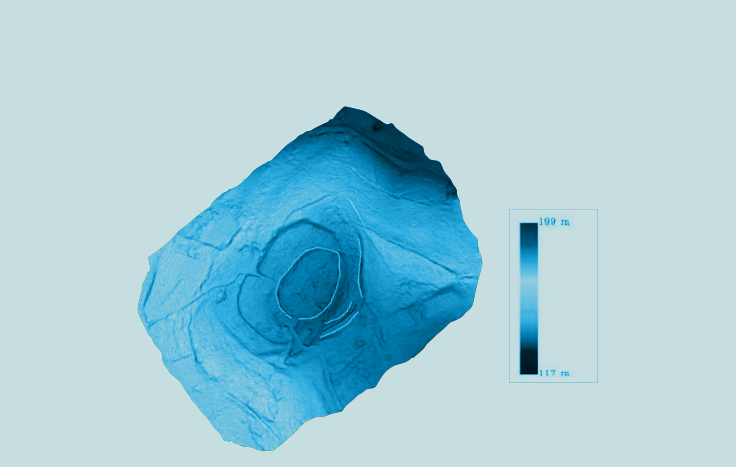
In the absence of archaeological excavations that would allow an in-depth understanding of the site, it can be dated to the Late Iron Age, with continued occupation after the Roman conquest of the north-west of the peninsula, between the 5th century BCE and the 1st century CE (Common Era). What is clear, however, following the Lydar survey carried out in 2025, is the complexity of its defensive structures, which stand out in the landscape and make it a unique castro within the Golfo Ártabro.
The site
The site has an oval main enclosure, or “croa”, bounded by a parapet that, at least in part, corresponds to a schist rubble-masonry wall between 3 and 5 m high. On the east side of the “croa”, where the terrain offers poorer natural defences, the fortifications are reinforced with three successive parapets combined with as many ditches.
To the north and west of the “croa” lies an antecastro, an area that can be regarded as an extension of the castro, usually linked to farming and livestock activities, and bounded by a bank between 3 and 4 m high.
The project
The whole project, carried out in 2025 and 2026 by the municipal councils of Pontedeume and Miño under the title “THE COASTAL CASTRO OF CENTROÑA-PERBES. CASTRO SEAFARING COMMUNITIES AS A DRIVING FORCE FOR THE MUNICIPALITIES OF PONTEDEUME AND MIÑO”, was funded through grants from the Consellería do Mar (Galician Regional Ministry of the Sea) for projects under the Community-Led Local Development Strategies (EDLP), approved for the Fisheries Local Action Groups (GALP) within the framework of the European Maritime, Fisheries and Aquaculture Fund 2021-2027.
The aim of the project was to launch a series of actions to raise awareness of the importance and uniqueness of the archaeological site through a Communication and Outreach Plan, guided tours, a social media campaign, the design and development of a responsive website, a virtual tour, a visual identity for the castro, signage and information leaflets. Looking ahead, the goal is to keep working along different lines, such as archaeological excavation campaigns that will lead to a better understanding of the castro, culminating in an ambitious heritage project.
The Ardóbriga Cultural Association.
Pioneers in protecting and promoting the castro
Ardóbriga, the cultural association for the protection of heritage, was founded in 2008 by a group of committed local residents to raise awareness of the importance of protecting cultural heritage, safeguarding existing archaeological sites and preserving the place-name heritage of the municipalities of Miño and Pontedeume.
Since then, the association has organised outreach activities such as talks, exhibitions, publications and excursions to promote public awareness of heritage through knowledge of our past. Particularly noteworthy is the public advocacy it has carried out since its foundation for the Castro de Centroña-Perbes to be protected and known, highlighting the uniqueness of this archaeological site within the Golfo Ártabro.
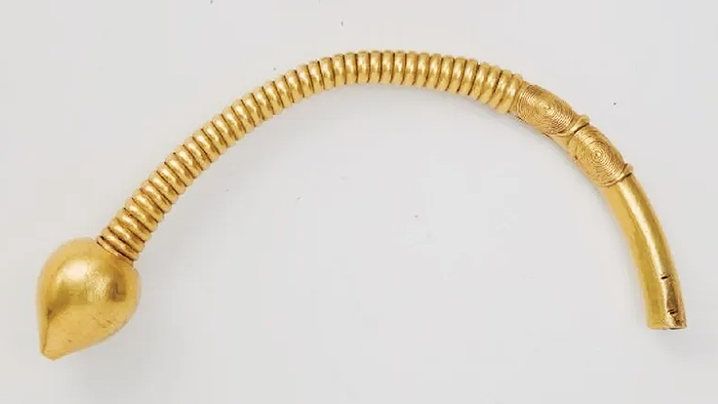
Documentation
The Castro de Centroña-Perbes.
Castro seafaring communities as a driving force for the municipalities of Pontedeume and Miño.
Historical study (in Galician)
Cartography & aerial photography
Castro seafaring communities as a driving force for the municipalities of Pontedeume and Miño.
PDF file (texts in Galician)
Castro brochure (Spanish)
Information brochure on the Castro de Centroña-Perbes, with its history and visitor information. In Spanish.
PDF file
Castro brochure (Galician)
Galician version of the information brochure, with the history of the castro and visitor information.
PDF file
Virtual tour
Discover the place where the castro is located in 360° and explore some of its most interesting features in situ. The button opens it on YouTube, where you can look around by dragging the image or, on a mobile phone, by moving the phone itself.